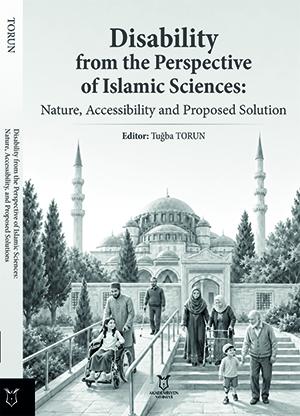
Religious Education For Individuals With Physical Disabilities: Problem Areas, Needs And a Proposal for an Inclusive Model
Synopsis
This chapter examines the difficulties that individuals with physical disabilities encounter in religious education across three settings, namely formal education, non-formal religious education and the family, and it proposes an inclusive religious education model in response. The study was conducted through document analysis. Field research, national legislation, the international conventions to which Türkiye is a party and institutional curricula developed for particular disability groups were analysed along three axes: the nature of disability, accessibility and proposed solutions. The analysis shows that physical disability calls for an adjustment of access and participation rather than a simplification of content. The body of dispensations (rukhṣa) in Islamic jurisprudence already supplies the legitimating ground for such adjustment, yet this body of knowledge is insufficiently reflected in curricula and teaching materials. Because the problem areas are mutually dependent, the response has to be coordinated as well. The proposed model therefore consists of four components, namely curriculum, materials and environment, human resources and institutional coordination, each of which acquires distinct content in the three settings. The model is rendered operable through a learning outcome adaptation procedure, a three-tier institutional self-assessment framework and a set of indicators that can be monitored at the provincial level. The proposals are related to the accessibility and equality of opportunity criteria set out in the Convention on the Rights of Persons with Disabilities.
References
Adıgüzel, A. (2026). Arapça yazma eserlerde metin tanıma (HTR) teknolojilerinin analizi: Web tabanlı araçlar üzerine bir inceleme [An analysis of handwritten text recognition (HTR) technologies in Arabic manuscripts: A study on web-based tools]. Kocatepe İslami İlimler Dergisi, 9(Özel Sayı), 162–182. https://doi.org/10.52637/kiid.1854450
Adıgüzel, A., & Özbek, M. S. (2026). Digital paleography in Arabic manuscripts: The performance levels of the Gemini model in recognizing naskh, taʿlīq, and ruqʿah scripts. Journal of Academic Research in Religious Sciences, 26(2), 909–941. https://doi.org/10.33415/daad.1914124
Aile ve Sosyal Hizmetler Bakanlığı Engelli ve Yaşlı Hizmetleri Genel Müdürlüğü [Ministry of Family and Social Services, Directorate General of Services for Persons with Disabilities and the Elderly]. (n.d.-a). Aylık istatistik bülteni [Monthly statistical bulletin]. https://www.aile.gov.tr/sgbd/istatistik-sayfalari/aylik-istatistik-bulteni/
Aile ve Sosyal Hizmetler Bakanlığı Engelli ve Yaşlı Hizmetleri Genel Müdürlüğü. (n.d.-b). Engellilerin haklarına ilişkin sözleşmenin onaylanmasının uygun bulunduğuna dair kanun ve engellilerin haklarına ilişkin sözleşme [Law approving the ratification of the Convention on the Rights of Persons with Disabilities and the Convention on the Rights of Persons with Disabilities]. https://www.aile.gov.tr/eyhgm/mevzuat/ulusal-mevzuat/kanunlar/engellilerin-haklarina-iliskin-sozlesmenin-onaylanmasinin-uygun-bulunduguna-dair-kanun-ve-engellilerin-haklarina-iliskin-sozlesme/
Aile ve Sosyal Hizmetler Bakanlığı Engelli ve Yaşlı Hizmetleri Genel Müdürlüğü. (2023). Engelli ve yaşlı istatistik bülteni: Temmuz 2023 [Statistical bulletin on persons with disabilities and older persons: July 2023]. https://www.aile.gov.tr/media/140662/eyhgm_istatistik_bulteni_temmuz_23.pdf
Bariroh, F. W., Wahid, A. H., & Agus R, A. H. (2024). Implementation of inclusive education: Challenges and strategies for religious education for people with disabilities. Proceeding of International Conference on Education, Society and Humanity, 2(2), 807–816. https://ejournal.unuja.ac.id/index.php/icesh/article/view/10260
Başkonak, M. (2017). Erişilebilirlik ve ulaşılabilirlik uygulamaları ile cami mimarisine yeni bir bakış: Engelsiz cami örneği [A new perspective on mosque architecture through accessibility and reachability practices: The case of the barrier-free mosque]. In A. Yılmaz, F. Narmanlı, & M. Fatsa (Eds.), Çağımızda cami mimarisinde arayışlar uluslararası sempozyumu [International symposium on explorations in mosque architecture in our age] (pp. 607–619). Giresun Üniversitesi İslami İlimler Fakültesi Yayınları.
Baysal, A., & Yurtseven, M. (2025). Geçmişten günümüze Kur'ân-ı Kerîm eğitim ve öğretim yöntemlerine dair bir inceleme [A study on the methods of Qur'anic education and instruction from the past to the present]. In M. Yurtseven (Ed.), Türkiye'de Caferiler [The Jaʿfarīs in Türkiye] (pp. 105–126). Palet Yayınları.
Can, N., & Kanger, F. (2024). Ortopedik engelli çocukların ve ebeveynlerinin ailede inanç eğitimine ilişkin görüşlerinin incelenmesi [An examination of the views of children with orthopaedic disabilities and their parents on faith education in the family]. Mevzu: Sosyal Bilimler Dergisi, (12), 1135–1171. https://doi.org/10.56720/mevzu.1520693
Carter, E. W., Pettit, M., Maddox, K., Westover, A., Le Shana, J. L., & Nelson-Neigum, T. (2026). Advancing accessible worship: Perspectives of disability ministry leaders. Journal of Disability & Religion, 30(2), 127–143. https://doi.org/10.1080/23312521.2025.2531800
Carter, E. W., Tuttle, M., Spann, E., Ling, C., & Jones, T. B. (2024). Toward accessible worship: The experiences and insights of Christians with disabilities. Journal of Disability & Religion, 28(2), 189–219. https://doi.org/10.1080/23312521.2023.2197435
CAST. (2024). Universal design for learning guidelines version 3.0. https://udlguidelines.cast.org/
Çelik, R. (2023). Ortopedik engelli bireylerin camideki din hizmetlerinde ve erişimde yaşadıkları sorunlara yönelik görüşleri [Views of individuals with orthopaedic disabilities on the problems they experience in religious services at the mosque and in gaining access to it]. Değerler Eğitimi Dergisi, 21(46), 257–285. https://doi.org/10.34234/ded.1282566
Çelik, R. (2025). Din kültürü ve ahlak bilgisi dersinde işitme engelli öğrencilere yönelik değer eğitimi uygulamaları: Bir eylem araştırması [Values education practices for students with hearing disabilities in the Religious Culture and Ethics lesson: An action research study]. UMDE Dinî Tetkikler Dergisi, 8(1), 108–126. https://doi.org/10.54122/umde.1667995
Diyanet İşleri Başkanlığı [Presidency of Religious Affairs]. (2021). İşitme engellilere yönelik Kur’an kursları özel öğretim programı [Special curriculum for Qur’an courses for individuals with hearing disabilities]. Diyanet İşleri Başkanlığı Eğitim Hizmetleri Genel Müdürlüğü.
Dönmez, İ. K. (2008). Ruhsat [Dispensation]. In TDV İslâm Ansiklopedisi (Vol. 35, pp. 207–210). Türkiye Diyanet Vakfı. https://islamansiklopedisi.org.tr/ruhsat
Engellilerin Haklarına İlişkin Sözleşme [Convention on the Rights of Persons with Disabilities]. (2009, July 14). Resmî Gazete (No. 27288). https://www.resmigazete.gov.tr/eskiler/2009/07/20090714-1.htm
Gün, A. (2020). İşitme engelliler okulunda görev yapan din kültürü ve ahlak bilgisi öğretmenlerinin değerlendirmeleri ışığında güçlü ve zayıf yönleriyle DKAB dersi [The Religious Culture and Ethics lesson with its strengths and weaknesses in the light of the evaluations of teachers working in a school for students with hearing disabilities]. Pamukkale Üniversitesi İlahiyat Fakültesi Dergisi, 7(1), 141–172. https://dergipark.org.tr/en/pub/pauifd/article/727854
Gürer, B., & Kaya, E. (2024). İşitme ve görme engellilere yönelik yaygın din eğitimi hizmetlerine katılanların problem ve beklentileri (İstanbul örneği) [Problems and expectations of those participating in non-formal religious education services for individuals with hearing and visual disabilities (The case of İstanbul)]. darulfunun ilahiyat, 35(1), 247–285. https://doi.org/10.26650/di.2023.34.2.1300195
Kanger, F. (2022). Omurilik felçlisi engellileri üzerine dinî ve manevi danışmanlık odaklı nitel bir araştırma [A qualitative study focused on religious and spiritual counselling with individuals with spinal cord injury]. Değerler Eğitimi Dergisi, 20(43), 105–133. https://doi.org/10.34234/ded.1045540
Karasu, T., & Şimşek, E. (2018). Zihinsel engelli kaynaştırma öğrencilerine yönelik din eğitimi: Yarı deneysel bir çalışma-destek eğitim odası [Religious education for students with intellectual disabilities in inclusive settings: A quasi-experimental study of the resource room]. Cumhuriyet İlahiyat Dergisi, 22(3), 1579–1606. https://doi.org/10.18505/cuid.455861
Korkmaz, M. (2021). Din kültürü ve ahlak bilgisi dersi öğretmenlerinin kaynaştırma eğitimi uygulamalarında karşılaştıkları sorunlar [Problems encountered by Religious Culture and Ethics teachers in inclusive education practices]. Marife Dini Araştırmalar Dergisi, 21(1), 319–353. https://doi.org/10.33420/marife.795358
Meyer, A., Rose, D. H., & Gordon, D. (2014). Universal design for learning: Theory and practice. CAST Professional Publishing.
Nurdin, A., Hendra, Khozin, Abdul Haris, Nurul Zainab, & Mohammad Zaini Yahaya. (2024). Developing the Islamic religious education curriculum in inclusive schools or madrasah and its implementation: A systematic literature review. Jurnal Pendidikan Agama Islam, 21(1), 94–110. https://doi.org/10.14421/jpai.v21i1.6907
Özbek, M. S. (2025). Gelenekten günümüze hadis şerhleri: Scopus veri tabanındaki araştırmalar üzerine bir meta-sentez [Hadith commentaries from tradition to the present: A meta-synthesis based on the Scopus database]. Düzce İlahiyat Dergisi, 9(2), 726–757. https://doi.org/10.61272/duid.1753008
Özel Eğitim Hizmetleri Yönetmeliği [Regulation on Special Education Services]. (2018, July 7). Resmî Gazete (No. 30471). https://www.resmigazete.gov.tr/eskiler/2018/07/20180707-8.htm
Pekcan, B. (2022). Ortopedik engelli bireye sahip ebeveynlerin din eğitimi ihtiyaçlarının incelenmesi [An examination of the religious education needs of parents of individuals with orthopaedic disabilities] [Master’s thesis, Ankara Üniversitesi]. YÖK Ulusal Tez Merkezi.
Pekcan, B., & Tosun, C. (2023). Ortopedik engelli çocuğu olan ebeveynlerin din eğitimi ihtiyaç ve içeriklerine yönelik görüşleri [Views of parents of children with orthopaedic disabilities on religious education needs and content]. Dini Araştırmalar, 26(64), 125–158. https://doi.org/10.15745/da.1262464
Rofiah, N. H., Kawai, N., & Sudiraharja, D. (2025). Pesantren and inclusion: Bridging religion and disability in Islamic education in Indonesia. African Journal of Disability, 14, 1–8. https://doi.org/10.4102/ajod.v14i0.1741
Şimşek, E., & Karasu, T. (2016). Din eğitiminde engellilere yönelik öğretim materyalleri (öğretmen görüşlerine dayalı) [Teaching materials for individuals with disabilities in religious education (based on teacher views)]. Sosyal Politika Çalışmaları Dergisi, (37), 51–73. https://dergipark.org.tr/en/pub/spcd/article/283228
Sireci, S. G., Scarpati, S. E., & Li, S. (2005). Test accommodations for students with disabilities: An analysis of the interaction hypothesis. Review of Educational Research, 75(4), 457–490. https://doi.org/10.3102/00346543075004457
Speraw, S. (2006). Spiritual experiences of parents and caregivers who have children with disabilities or special needs. Issues in Mental Health Nursing, 27(2), 213–230. https://doi.org/10.1080/01612840500436974
Tapkı, S. (2023). Cami yapılarının ergonomik açıdan irdelenmesi: Marmara Üniversitesi İlahiyat Fakültesi Camii örneği [An ergonomic examination of mosque buildings: The case of the Marmara University Faculty of Theology Mosque]. Gümüşhane Üniversitesi Fen Bilimleri Dergisi, 13(4), 884–910. https://doi.org/10.17714/gumusfenbil.1233414
Tosun, C. (2015). Din eğitimi bilimine giriş [Introduction to the science of religious education] (8th ed.). Pegem Akademi Yayıncılık.
Turanalp, M. F. (2018). Ortopedik engelli bireylerde din eğitimi [Religious education for individuals with orthopaedic disabilities]. In S. Özdemir & M. Başkonak (Eds.), Özel eğitimde din eğitimi [Religious education in special education] (pp. 189–206). Grafiker Yayınları.
Türkiye Diyanet Vakfı. (1998). İlmihal I: İman ve ibadetler [Catechism I: Faith and acts of worship].
United Nations, Department of Economic and Social Affairs, Division for Inclusive Social Development. (2006). Convention on the Rights of Persons with Disabilities. https://social.desa.un.org/issues/disability/crpd/convention-on-the-rights-of-persons-with-disabilities-crpd
World Health Organization. (1948). Constitution of the World Health Organization. https://www.who.int/about/governance/constitution
World Health Organization. (2001). International classification of functioning, disability and health (ICF). https://www.who.int/standards/classifications/international-classification-of-functioning-disability-and-health
Yalçın Koçak, N. S., & Özdemir, Ş. (2021). Çamlıca Camii’nin evrensel tasarım kapsamında değerlendirilmesi [An evaluation of the Çamlıca Mosque within the scope of universal design]. Bartın University International Journal of Natural and Applied Sciences (JONAS), 4(2), 133–145. https://dergipark.org.tr/en/pub/jonas/article/970876
Yücel, M., & Bulut, R. (2020). Bedensel engellilerin din hizmetlerine erişimlerinde yaşadığı sorunlar: Alaşehir örneği [Problems experienced by individuals with physical disabilities in accessing religious services: The case of Alaşehir]. Akademik Platform İslami Araştırmalar Dergisi, 4(1), 70–85. https://dergipark.org.tr/en/pub/apjir/article/709663
Yurtseven, M., Çınar, F., Akbay, Y. E., & Tekin, A. (2025). The Qurʾān teaching activities of Jaʿfarī communities in Türkiye: An analysis from the perspective of instructors. Religions, 16(4), Article 424. https://doi.org/10.3390/rel16040424
Zulkifli, H., Mohd Rashid, S. M., Mohamed, S., Toran, H., Mohd Raus, N., Mohd Pisol, M. I., & Suratman, M. N. (2022). Designing the content of religious education learning in creating sustainability among children with learning disabilities: A fuzzy Delphi analysis. Frontiers in Psychology, 13, Article 1036806. https://doi.org/10.3389/fpsyg.2022.1036806