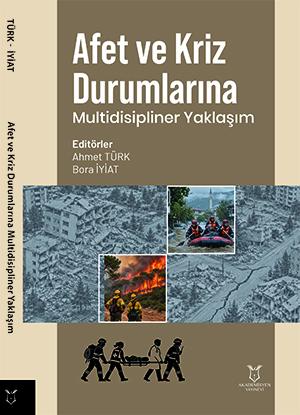
Afet ve Kriz Durumlarında Kronik Hastalıklarda Bakım Sürekliliği
Özet
Kronik hastalıklar, düzenli izlem, sürekli tedavi, ilaç ve tıbbi malzemelere erişim ile uzun dönemli öz yönetim desteği gerektirir. Afet ve krizler sağlık hizmetlerini, tedarik zincirlerini, ulaşımı, iletişimi ve yaşam koşullarını bozarak kronik hastalıkların kontrolünü güçleştirebilir. Bu durum özellikle yaşlı, engelli, birden fazla kronik hastalığı bulunan, yaşamı sürdürücü tedavilere bağımlı olan ve sosyal desteği sınırlı bireylerde ciddi komplikasyonlara yol açabilir. Bu bölümde afetlerin kronik hastalık yönetimine etkileri, bakım sürekliliği kavramı ve bakımın sürekliliğini belirleyen faktörler ele alınmıştır. Afet öncesi hazırlık, afet sırasındaki temel hizmetlerin sürdürülmesi ve afet sonrasındaki uzun dönemli izlem; diyabet, hipertansiyon ve kardiyovasküler hastalıklar, kronik böbrek hastalığı, KOAH ve astım özelinde incelenmiştir. Ayrıca hemşirenin risk değerlendirmesi, eğitim, klinik izlem, bakım koordinasyonu, psikososyal destek, etik karar verme ve savunuculuk rolleri değerlendirilmiştir. Kronik hastalıklarda bakım sürekliliğinin sağlanması, yalnızca ilaç teminine değil; bireyselleştirilmiş hazırlık, erişilebilir sağlık kayıtları, koordineli hizmet sunumu ve uzun dönemli izleme dayanmaktadır. Bu nedenle kronik hastalık bakımı, afet yönetiminin hazırlık, müdahale ve iyileştirme aşamalarının tamamına bütünleştirilmelidir.
Referanslar
Abe, M., Akaishi, T., Ishizawa, K., Shinano, H., Ohtomo, H., Orikasa, K., Takayama, S., Masaura, A., Miyazaki, M., Abe, T., Yokota, K., & Ishii, T. (2022). A massive natural disaster, the Great East Japan Earthquake, and the incidence of dialysis due to end-stage kidney disease. Journal of Nephrology, 35(3), 719–724. https://doi.org/10.1007/s40620-021-01140-9
Alani, A. H., Miller, L., Darji, B., Waweru, I., Atwiine, A. B., Tonelli, M., Mogga, J. L. K., Adams, A., Ndinda, L., Jongo, S., & Kiapi, L. (2023). Assessment of the WHO non-communicable diseases kit for humanitarian emergencies in South Sudan: A retrospective, prospective, observational study. Conflict and Health, 17, 27. https://doi.org/10.1186/s13031-023-00525-w
Alasfar, S., Koubar, S. H., Gautam, S. C., & Jaar, B. G. (2024). Kidney care in times of crises: A review. American Journal of Kidney Diseases, 84, 621–631. https://doi.org/10.1053/j.ajkd.2024.03.030
Aldrich, N., & Benson, W. F. (2008). Disaster preparedness and the chronic disease needs of vulnerable older adults. Preventing Chronic Disease Public Health Research, Practice and Policy. Preventing Chronic Disease, 5(1), A27. https://europepmc.org/article/PMC/2248769
American Diabetes Association. (n.d.). Tips for emergency preparedness. Retrieved August 21, 2026, from https://diabetes.org/tools-resources/disaster-relief/tips-for-emergency-preparedness
American Heart Association. (2025, August 14). When to call 911 about high blood pressure. https://www.heart.org/en/health-topics/high-blood-pressure/understanding-blood-pressure-readings/when-to-call-911-for-high-blood-pressure
Arrieta, M. I., Foreman, R. D., Crook, E. D., & Icenogle, M. L. (2009). Providing continuity of care for chronic diseases in the aftermath of Katrina: From field experience to policy recommendations. Disaster medicine and public health preparedness, 3(3), 174–182. https://doi.org/10.1097/DMP.0b013e3181b66ae4
Asgary, R., Garland, V., Ro, V., Stribling, J. C., & Waldman, R. (2022). A systematic review of effective strategies for chronic disease management in humanitarian settings; opportunities and challenges. Preventive Medicine, 161, 107154. https://doi.org/10.1016/j.ypmed.2022.107154
Babaie, J., Pashaei Asl, Y., Naghipour, B., & Faridaalaee, G. (2021). Cardiovascular diseases in natural disasters; a systematic review. Archives of Academic Emergency Medicine, 9(1), e36. https://doi.org/10.22037/aaem.v9i1.1208
Bell, S. A., Dickey, S., & Rosemberg, M. A. (2021). "You get three different hats on and try to figure it out:" Home based care provision during a disaster. BMC Nursing, 20, 155. https://doi.org/10.1186/s12912-021-00676-2
Bell, S. A., Horowitz, J., & Iwashyna, T. J. (2020). Health outcomes after disaster for older adults with chronic disease: A systematic review. The Gerontologist, 60(7), e535–e547. https://doi.org/10.1093/geront/gnz123
Blake, D., Cargill Thompson, J., Chamberlain, K., Doyle, E. E. H., & Kearns, N. (2022). “I need to have a plan in place”: Accessing medications and health treatments during a disaster for people with long-term health conditions. International Journal of Disaster Risk Reduction, 83, 103411. https://doi.org/10.1016/j.ijdrr.2022.103411
Buford, A., Ashworth, H. C., Ezzeddine, F. L., Dada, S., Nguyen, E., Ebrahim, S., Zhang, A., Lebovic, J., Hamvas, L., Prokop, L. J., Midani, S., Chilazi, M., & Alahdab, F. (2022). Systematic review of electronic health records to manage chronic conditions among displaced populations. BMJ Open, 12, e056987. https://doi.org/10.1136/bmjopen-2021-056987
Centers for Disease Control and Prevention. (2024, May 15). Diabetes care during emergencies. https://www.cdc.gov/diabetes/articles/diabetes-care-emergencies.html
De Rubeis, V., Lee, J., Anwer, M. S., Yoshida-Montezuma, Y., Andreacchi, A. T., Stone, E., Iftikhar, S., Morgenstern, J. D., Rebinsky, R., Neil-Sztramko, S. E., Alvarez, E., Apatu, E., & Anderson, L. N. (2021). Impact of disasters, including pandemics, on cardiometabolic outcomes across the life-course: A systematic review. BMJ Open, 11, e047152. https://doi.org/10.1136/bmjopen-2020-047152
Doğan, U., & Tamer, M. (2024). Kronik hastalığı olan yetişkin bireylerin 6 Şubat 2023 Kahramanmaraş merkezli depremler sonrası hastalık yönetimine ilişkin deneyimleri: Nitel bir araştırma. Kocatepe Tıp Dergisi, 25(4), 429–437. https://doi.org/10.18229/kocatepetip.1421392
Dyer, S. M., Suen, J., Williams, H., Inacio, M. C., Harvey, G., Roder, D., Wesselingh, S., Kellie, A., Crotty, M., & Caughey, G. E. (2022). Impact of relational continuity of primary care in aged care: A systematic review. BMC Geriatrics, 22, 579. https://doi.org/10.1186/s12877-022-03131-2
Erbaycu, A. E., Güçsav, M. O., & Ayrancı, A. (2025). Early respiratory problems and tobacco use in the region affected by Kahramanmaraş earthquakes. Anatolian Journal of General Medicine Research, 35(1), 16–22. https://doi.org/10.4274/anatoljmed.2024.94547
Fithriyyah, Y. N., Alda, A. K., & Haryani, H. (2023). Trends and ethical issues in nursing during disasters: A systematic review. Nursing Ethics, 30(6), 753–775. https://doi.org/10.1177/09697330231155602
Ghazanchaei, E., Allahbakhshi, K., Khorasani-Zavareh, D., Aghazadeh-Attari, J., & Mohebbi, I. (2023). A qualitative evaluation of the challenges in management for patients with chronic diseases during disasters in Iran. Journal of Injury and Violence Research, 15(2), 113–128. https://doi.org/10.5249/jivr.v15i2.1767
Ghazanchaei, E., Khorasani-Zavareh, D., Aghazadeh-Attari, J., & Mohebbi, I. (2022). Establishing the status of patients with non-communicable diseases in disaster: A systematic review. Disaster Medicine and Public Health Preparedness, 16(2), 783–790. https://doi.org/10.1017/dmp.2020.364
Haggerty, J. L., Reid, R. J., Freeman, G. K., Starfield, B. H., Adair, C. E., & McKendry, R. (2003). Continuity of care: A multidisciplinary review. BMJ, 327, 1219–1221. https://doi.org/10.1136/bmj.327.7425.1219
Hoshide, S., Nishizawa, M., Okawara, Y., Harada, N., Kunii, O., Shimpo, M., & Kario, K. (2019). Salt intake and risk of disaster hypertension among evacuees in a shelter after the Great East Japan Earthquake. Hypertension, 74(3), 564–571. https://doi.org/10.1161/HYPERTENSIONAHA.119.12943
International Council of Nurses. (2019). Core competencies in disaster nursing, version 2.0. Erişim tarihi 21 Ağustos 2026, https://www.icn.ch/resources/publications-and-reports/core-competencies-disaster-nursing-version-20
Jaung, M. S., Willis, R., Sharma, P., Aebischer Perone, S., Frederiksen, S., Truppa, C., Roberts, B., Perel, P., Blanchet, K., & Ansbro, É. (2021). Models of care for patients with hypertension and diabetes in humanitarian crises: A systematic review. Health Policy and Planning, 36(4), 509–532. https://doi.org/10.1093/heapol/czab007
Joo, J. Y. (2023). Fragmented care and chronic illness patient outcomes: A systematic review. Nursing Open, 10(6), 3460–3473. https://doi.org/10.1002/nop2.1607
Kalaycı, G. J., & Şimşek Yurt, N. (2024). Kahramanmaraş merkezli depremler sonrası Samsun iline göç eden depremzedelerin sağlık ihtiyaçlarının değerlendirilmesi. Turkish Journal of Family Medicine and Primary Care, 18(2), 188–195. https://doi.org/10.21763/tjfmpc.1431691
Kanter, R. K., Abramson, D. M., Redlener, I., & Gracy, D. (2015). The medical home and care coordination in disaster recovery: Hypothesis for interventions and research. Disaster Medicine and Public Health Preparedness, 9(4), 337–343. https://doi.org/10.1017/dmp.2015.22
Kaya, S., & Türk, A. (2023). Afetlerde psikososyal destek profesyonellerinin travmaya müdahale becerilerinin incelenmesi. A. Bilgili & B. Hanedan (Ed.), Sağlık Bilimlerinde Güncel Tartışmalar 7 (ss. 646-655) içinde. Bilgin Kültür Sanat Yayınları.
Kilfoy, A., Chu, C., Krisnagopal, A., McAtee, E., Baek, S., Zworth, M., Hwang, K., Park, H., & Jibb, L. (2025). Nurse-led remote digital support for adults with chronic conditions: A systematic synthesis without meta-analysis. Journal of Clinical Nursing, 34(3), 715–736. https://doi.org/10.1111/jocn.17226
Kuhn, B. T., & Gupta, R. (2024). Improving wildfire readiness among patients with chronic obstructive pulmonary disease and asthma: Applying a population health approach to climate change. Chronic Obstructive Pulmonary Diseases: Journal of the COPD Foundation, 11(4), 427–435. https://doi.org/10.15326/jcopdf.2024.0509
Latimer, S., Hewitt, J., Stanbrough, R., McPhail, S. M., Cardona, M., Hall, L., & Gillespie, B. M. (2023). Medication reconciliation at hospital discharge: A qualitative exploration of acute care nurses' perceptions of their roles and responsibilities. Journal of Clinical Nursing, 32, 1276–1285. https://doi.org/10.1111/jocn.16275
Madani, S. M. S., Bahramnejad, A., Farsi, Z., Alizadeh, A., & Azizi, M. (2024). The effect of psychological first-aid virtual education on the communication skills of nurses in disasters: A randomized controlled trial. BMC Psychology, 12(1), 224. https://doi.org/10.1186/s40359-024-01682-0
Ngaruiya, C., Bernstein, R., Leff, R., Wallace, L., Agrawal, P., Selvam, A., Hersey, D., & Hayward, A. (2022). Systematic review on chronic non-communicable disease in disaster settings. BMC Public Health, 22, 1234. https://doi.org/10.1186/s12889-022-13399-z
Ozdemir, S., & Ozturk, S. (2025). Impact of a major earthquake on glycemic control in adults with type 2 diabetes: A retrospective cohort study from Türkiye. Diagnostics, 15(18), 2361. https://doi.org/10.3390/diagnostics15182361
Radhakrishnan, K., & Jacelon, C. (2009). Synthesis of literature on strategies for chronic disease management post disasters. Journal of Nursing and Healthcare of Chronic Illness, 1(4), 294–302. https://doi.org/10.1111/j.1752-9824.2009.01033.x
Segev, R., Suliman, M., Gorodetzer, R., Zukin, L., & Spitz, A. (2025). Nursing roles in disaster zones: Experiences and lessons from Turkey's 2023 earthquakes. International Nursing Review, 72(1), e12964. https://doi.org/10.1111/inr.12964
Sever, M. S., Luyckx, V., Tonelli, M., Kazancioglu, R., Rodgers, D., Gallego, D., Tuglular, S., & Vanholder, R. (2023). Disasters and kidney care: Pitfalls and solutions. Nature Reviews Nephrology, 19(10), 672–686. https://doi.org/10.1038/s41581-023-00743-8
Slama, S., Kim, H.-J., Roglic, G., Boulle, P., Hering, H., Varghese, C., Rasheed, S., & Tonelli, M. (2017). Care of non-communicable diseases in emergencies. The Lancet, 389(10066), 326–330. https://doi.org/10.1016/S0140-6736(16)31404-0
T.C. Sağlık Bakanlığı. (2021). Hastane Afet ve Acil Durum Planı (HAP) hazırlama kılavuzu (2. sürüm). https://www.saglik.gov.tr/TR,1789/hastane-afet-ve-acil-durum-plani-hap-hazirlama-kilavuzu.html
T.C. Sağlık Bakanlığı. (2023). Toplu yaşam alanlarında birinci basamak sağlık hizmetleri uygulamamızı sürdürüyoruz. https://www.saglik.gov.tr/TR-94840/toplu-yasam-alanlarinda-birinci-basamak-saglik-hizmetleri-uygulamamizi-surduruyoruz.html
Tomio, J., & Sato, H. (2014). Emergency and disaster preparedness for chronically ill patients: A review of recommendations. Open Access Emergency Medicine, 6, 69–79. https://doi.org/10.2147/OAEM.S48532
Türk, A. (2022). Deprem özelinde engelli bireylere duyarlı afet yönetimi modeli. Afet ve Risk Dergisi, 5(1), 61-77.
Türk, A., & Kaya, S. (2023). Deprem sonrası psikososyal destek uygulamalarında merhamet yorgunluğunun psikolojik sağlamlığa etkisi: Sosyal hizmet uzmanları üzerine bir araştırma. Uluslararası Sosyal Hizmet Araştırmaları Dergisi, 3(2), 81-91. https://doi.org/10.57114/jswrpub.1312507
Vaccarino, V., & Bremner, J. D. (2024). Stress and cardiovascular disease: An update. Nature Reviews Cardiology, 21(9), 603–616. https://doi.org/10.1038/s41569-024-01024-y
Witter, S., Thomas, S., Topp, S. M., Barasa, E., Chopra, M., Cobos, D., Blanchet, K., Teddy, G., Atun, R., & Ager, A. (2023). Health system resilience: A critical review and reconceptualisation. The Lancet Global Health, 11(9), e1454–e1458. https://doi.org/10.1016/S2214-109X(23)00279-6
World Health Organization Regional Office for Europe. (2023, August 1). Türkiye earthquakes: Six months of resilient response and support. https://www.who.int/europe/news/item/01-08-2023-turkiye-earthquakes--six-months-of-resilient-response-and-support
World Health Organization Regional Office for Europe. (2025). WHO operational review of Türkiye’s approach to noncommunicable diseases during the emergency response to the 2023 earthquakes (WHO/EURO:2025-10439-50211-75653). https://iris.who.int/handle/10665/380054
World Health Organization Regional Office for the Eastern Mediterranean. (2023, September). Addressing noncommunicable diseases in emergencies: A regional framework for action (EM/RC70/3-Rev.1). https://applications.emro.who.int/docs/NCDs-emergencies-eng.pdf
World Health Organization. (2022, May 28). World Health Assembly approves recommendations to support people living with NCDs in humanitarian emergencies. https://www.who.int/news-room/feature-stories/detail/world-health-assembly-approves-recommendations-to-support-people-living-with-ncds-in-humanitarian-emergencies
Xue, C. L., Shu, Y. S., Hayter, M., & Lee, A. (2020). Experiences of nurses involved in natural disaster relief: A meta-synthesis of qualitative literature. Journal of Clinical Nursing, 29, 4514–4531. https://doi.org/10.1111/jocn.15476
Yang, F., Zhu, L., & Li, S. (2024). Treatment-related problems and countermeasures for patients undergoing maintenance hemodialysis following tropical cyclones: A scoping review. Disaster Medicine and Public Health Preparedness, 18, e117. https://doi.org/10.1017/dmp.2024.70
Zhu, L., Liu, Y., Li, S., Liao, R., Fu, P., & Yuan, H. (2024). Factors related to the disaster preparedness of patients on haemodialysis from Sichuan, China, during COVID-19: A cross-sectional study. Nursing Open, 11(8), e70005. https://doi.org/10.1002/nop2.70005