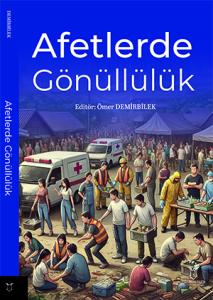
Afad ve Sivil Toplum Kuruluşlarının Gönüllülük Uygulamalarının Değerlendirilmesi ve Literatür Kapsamında Model Önerisi
Özet
Afet gönüllülüğü, afetler sırasında toplumsal dayanıklılığı artırmak ve müdahale kapasitesini genişletmek açısından büyük önem taşımaktadır. Afet zamanlarındaki risklerin en aza indirilmesi ve gönüllülerin bireysel potansiyellerinin en üst düzeye çıkarılması için gönüllülerin afet yönetim sistemlerinde yer alması ve koordine edilmesi gerekmektedir. Gönüllülerin afet bölgelerinde doğru yönetildiğinde müdahale sürecinin kontrol altına alınması ve katkıları ne denli önemliyse, gönüllülerin doğru yönetilememesi ve bir sistem dahilinde olmadan bağımsız hareket etmeleri ise o derece olumsuz sonuçlar doğurabilmektedir. Bu sebeple gönüllülerin sisteme kayıtlı olmaları, eğitimleri, ekipman kullanımı, sahadaki ekip uyumu ve verilen görevleri yerine getirmeleri sistemin sürdürülebilirliği açısından son derece önemlidir. Çalışmanın amacı ve içeriği, üç seviyeden oluşan gönüllülük modeli önerisinde gönüllülerin her seviye için ayrı ayrı eğitim ve uygulamalarının olması gerekliliği tavsiye edilmektedir. Alınan her eğitimin sonunda teorik ve/veya uygulamalı sınavlar ile yetkinliklerinin tespit edilmesi ve sertifikalandırılması kaynak kapasitesinin tespiti açısından önem arz etmektedir. Ayrıca gönüllülük esaslı faaliyetlerde sürdürülebilirlik sağlanabilmesi adına her seviyede kurumsal aidiyet kazandıracak motivasyon odaklı eğitim ve faaliyetlerin yapılması tavsiye edilmektedir. Afet gönüllülüğünün toplumun tamamına yayılması gerekliliği göz önüne alındığında afet zamanlarında veya kurumun gönüllü talebi olduğu durumlarda çalışanlar, öğrenciler veya izin gerektiren meslek grupları için özel izin prosedürlerinin hazırlanması sürdürülebilirlik açısından önem arz etmektedir. Afet gönüllülerinin sağlık ve çalışma kaynaklı endişelerinin giderilmesi adına görev bazlı sigortalanması halinde sistemin sürdürülebilirliğine katkı sunacağı öngörülmektedir.
Referanslar
Acil Yardım ve Afet Yöneticileri Derneği (AYAYDER). (2021). Temel Arama Kurtarma Eğitim Laboratuvarı Ekipmanları. https://ayayder.org/Arama-Kurtarma.pdf adresinden erişildi.
Adams, L. M. (2007). Mental Health Needs of Disaster Volunteers: A Plea for Awareness. Perspectives in Psychiatric Care, 43(1), 52-54. doi:https://doi.org/10.1111/j.1744-6163.2007.00107.x
AFAD. (2009). AFAD ve Tarihçesi. https://www.afad.gov.tr/afad-hakkinda adresinden erişildi.
AFAD. (2011). Köpekli Arama Timi Çalışma ve Sınav Yönetmeliği. https://www.mevzuat.gov.tr/File/GeneratePdf?mevzuatNo=15013&mevzuatTur=KurumVeKurulusYonetmeligi&mevzuatTertip=5 adresinden erişildi.
AFAD. (2013). Ulusal Deprem Stratejisi ve Eylem Planı 2012-2023. https://deprem.afad.gov.tr/assets/udsep/UDSEP2023.pdf adresinden erişildi.
AFAD. (2023). Kentsel Arama ve Kurtarma Akreditasyon Sistemi (KAVKAS) ve INSARAG Tanımlı Ulusal Akreditasyon Sistemi (IRNAP/ITUAS) Klavuzu. https://tekirdag.afad.gov.tr/kurumlar/tekirdag.afad/Faaliyetlerimiz/Akreditasyon/Kentsel_Arama_Kurtarma_Kilavuzu.pdf adresinden erişildi.
AFAD. (2024-a). 2024 yılı Performans Programı. https://www.sbb.gov.tr/wp-content/uploads/2024/01/2024-Yili-Performans-Programi.pdf adresinden erişildi.
AFAD. (2024-b). AFAD Gönüllüsü Gönüllülük Seviyeleri. https://gonullu.afad.gov.tr/ adresinden erişildi.
AFAD. (2024-c). 2024-2028 Stratejik Planı. https://www.afad.gov.tr/kurumlar/afad.gov.tr/e_Kutuphane/Planlar/2024_2028-AFAD-Stratejik-Plani.pdf adresinden erişildi.
AFAD. (2024-d). Arama Kurtarma Ekip ve Ekipmanlarımız. https://www.afad.gov.tr/arama-kurtarma-ekip-ve-araclarimiz adresinden erişildi.
AFAD. (2024-e). AFAD Gönüllüsü Eğitimlerim. https://gonullu.afad.gov.tr/Anasayfa/Pano# adresinden erişildi.
AFAD. (2024-f). AFAD Arama Kurtarma Köpekleri. https://www.afad.gov.tr/arama-kurtarma-kopekleri#:~:text=AFAD%20Arama%20Kurtarma%20K%C3%B6pekleri%2C%20kentsel,ile%20ekip%20halinde%20hareket%20eder. adresinden erişildi.
Afet ve Acil Durum Yönetimi Başkanlığı (AFAD). (2022). Türkiye Afet Müdahale Planı (TAMP). https://www.afad.gov.tr/kurumlar/afad.gov.tr/e_Kutuphane/Planlar/TAMP.pdf adresinden erişildi.
AKUT. (2024). AKUT'a Katılmak İçin Sporcu Olmak Şart mı? https://www.akut.org.tr/sss adresinden erişildi.
AKUT Vakfı. (2024). Eğitimlerimiz. https://akutvakfi.org.tr/egitim_kategori/egitim-turlerimiz/ adresinden erişildi.
Anda Derneği. (2024). Anda Derneği Arama / Kurtarma. https://anda.org.tr/arama-kurtarma/ adresinden erişildi.
Apel, D., ve Coenen, M. (2020). Motivational and educational starting points to enhance mental and physical health in volunteer psycho-social support providers after the 2013 flood disaster in Germany. International Journal of Disaster Risk Reduction, 43, 101359.
Arama Kurtarma Ekoloji-İnsani Yardım (GEA. (2024). Eğitimler. https://gea.org.tr/egitimler/ adresinden erişildi.
Arias-Aranda, D., Rabiei, P., ve Stantchev, V. (2023). Introducing a novel multi-objective optimization model for Volunteer assignment in the post-disaster phase: combining fuzzy inference systems with NSGA-II and NRGA. Available at SSRN 4290602.
Boztilki, M., ve Barış, İ. (2024). A Research on The Experiences of Disaster Volunteers on 2023 Kahramanmaras Earthquakes. Amme İdare Dergisi.
Bullock, J., Haddow, G., ve Coppola, D. (2017). Introduction to emergency management: Butterworth-Heinemann.
Damery, S., Wilson, S., Draper, H., Gratus, C., Greenfield, S.,Sorell, T. (2009). Will the NHS continue to function in an influenza pandemic? a survey of healthcare workers in the West Midlands, UK. BMC Public Health, 9(1), 142. doi:10.1186/1471-2458-9-142
Demirbilek, Ö. (2023). Afetlerde Gönüllülük: Güncel Uygulamadaki Sorunlara Çözüm Önerileri ve Yeni Bir Gönüllülük Yapısı Önerisi.
Demirbilek, Ö., ve Öztürk, S. (2023). Understanding university students WHO do not want to volunteer in disasters: A qualitative study from Türkiye. International Journal of Disaster Risk Reduction, 96, 103994. doi:https://doi.org/10.1016/j.ijdrr.2023.103994
Doğal Afet ve Sualtı Arama Kurtarma (DOSAK). (2024). DOSAK Gönüllüsü Olmak İster Misiniz? https://www.dosak.org/gonullu-ol adresinden erişildi.
Doğru, S. h. (2020). AFAD Gönüllülük sisteminin etkin müdahale açısından analizi. Dokuz Eylül Üniversitesi Türkiye,
Dolce, A., ve Ricciardi, M. (2007). Impact of psychological risk factors on disaster rescue operations: the case of Italian volunteers. Disasters, 31(1), 91-103.
Dynes, R. R. (1994). Community emergency planning: False assumptions and inappropriate analogies. International Journal of Mass Emergencies & Disasters, 12(2), 141-158.
Fernandez, L. S., Barbera, J. A., ve Van Dorp, J. R. (2006). Strategies for managing volunteers during incident response: A systems approach. Homeland Security Affairs, 2(3).
Funda, İ. (2011). Sivil Toplum Kuruluşlarının Finansal Kaynaklara Ulaşmasında Bilişimin Etkisi: Türkiye Eğitim Gönüllüleri Vakfı’nın Analizi. Yayınlanmamış Yüksek Lisans Tezi.
Genç Neval, F. (2021). Afet Yönetimi: Nobel Akademik Yayıncılık, Ankara.
Güler, K. G. (2023). Arama kurtarma STK'larının örgütlenme biçimi: Bursa örneği.
Helsloot, I., ve Ruitenberg, A. (2004). Citizen response to disasters: a survey of literature and some practical implications. Journal of Contingencies and Crisis Management, 12(3), 98-111.
Hilbun, A. (2016). Managing Volunteers in Times of Disaster: The Local Volunteer Coordinator's Role: Mississippi State University Extension.
İnsani Yardım Vakfı (İHH). (2024). Afet Yönetimi. https://ihh.org.tr/afet-yonetimi adresinden erişildi.
İstanbul Teknik Üniversitesi (İTÜ). (2024). Temel Arama-Kurtarma Ekipmanları. https://akut.itu.edu.tr/ba%C4%9F%C4%B1%C5%9F-ve-destek/ihtiyac-listesi/temel-arama-kurtarma-ekipmanlari adresinden erişildi.
Johansson, R., Danielsson, E., Kvarnlöf, L., Eriksson, K., ve Karlsson, R. (2018). At the external boundary of a disaster response operation: The dynamics of volunteer inclusion. Journal of Contingencies and Crisis Management, 26(4), 519-529.
JVOAD. (2024). Japan Voluntary Organizations Active in Disaster (JVOAD). https://jvoad.jp/about/outline/ adresinden erişildi.
Lin, B. C., ve Lee, C. H. (2023). Constructing an adaptability evaluation framework for community-based disaster management using an earthquake event. International Journal of Disaster Risk Reduction, 93, 103774.
McLennan, B., Whittaker, J., ve Handmer, J. (2016). The changing landscape of disaster volunteering: opportunities, responses and gaps in Australia. Natural hazards, 84, 2031-2048.
Miller, A., Jensen, S., ve Moore, A. (2005). Managing Spontaneous Volunteers in Times of Disaster. Paper presented at the EIIP Virtual Forum Presentation.
Nahkur, O., Orru, K., Hansson, S., Jukarainen, P., Myllylä, M.,Meyer, S. F. (2022). The engagement of informal volunteers in disaster management in Europe. International Journal of Disaster Risk Reduction, 83, 103413.
Oberijé, N. (2007). Civil response after disasters. The use of civil engagement in disaster abatement.[Online].
Olson-Buchanan, J., Bryan, L. K., ve Thompson, L. F. (2013). Using industrial-organizational psychology for the greater good: Routledge New York, NY.
Özerdem, A., ve Jacoby, T. (2006). Disaster management and civil society: Earthquake relief in Japan, Turkey and India (Vol. 1): Citeseer.
Pesonen, M., Kurttila, M., Kangas, J., Kajanus, M., ve Heinonen, P. (2001). Assessing the priorities using A'WOT among resource management strategies at the Finnish Forest and Park Service. Forest science, 47(4), 534-541.
Points of Light Foundation. (2004). Managing spontaneous volunteers in times of disaster: The synergy of structure and good intentions: Points of Light.
Puyt, R. W., Lie, F. B., ve Wilderom, C. P. (2023). The origins of SWOT analysis. Long Range Planning, 56(3), 102304.
Rao, K. (2006). Psychosocial support in disaster-affected communities. International Review of Psychiatry, 18(6), 501-505. doi:10.1080/09540260601038472
Resmi Gazete. (2011). Sağlık Bakanlığı Sertifikalı Eğitim Yönetmeliği. https://www.mevzuat.gov.tr/File/GeneratePdf?mevzuatNo=19376&mevzuatTur=KurumVeKurulusYonetmeligi&mevzuatTertip=5 adresinden erişildi.
Saçlı, A. (2023). 100 Years Housing Policies of The Republic of Türkiye. International Journal of Middle East Research.
San Juan Guillén, C. (2011). The role of the organisational psychologist in disasters and emergency situations. Disasters, 35(2), 346-361.
Scanlon, J., Helsloot, I., ve Groenendaal, J. (2014). Putting it all together: Integrating ordinary people into emergency response. International Journal of Mass Emergencies & Disasters, 32(1), 43-63.
Sodhi, M. S. (2016). Natural disasters, the economy and population vulnerability as a vicious cycle with exogenous hazards. Journal of Operations Management, 45, 101-113. doi:https://doi.org/10.1016/j.jom.2016.05.010
Subbarao, I., Lyznicki, J. M., Hsu, E. B., Gebbie, K. M., Markenson, D.,James, J. J. (2008). A Consensus-based Educational Framework and Competency Set for the Discipline of Disaster Medicine and Public Health Preparedness. Disaster medicine and public health preparedness, 2(1), 57-68. doi:10.1097/DMP.0b013e31816564af
Teyit. (2023). Büyüteç: Deprem vergilerine ne oldu? https://teyit.org/dosya/buyutec-deprem-vergilerine-ne-oldu adresinden erişildi.
The Western Massachusetts Region Homeland Security Advisory Council (WRHSAC). (2016). Spontaneous Volunteer Management System Plan Template. https://wrhsac.org/wp-content/uploads/2016/07/VMS-Plan-Template-Final-July-2016.pdf adresinden erişildi.
Tierney, K. J., Lindell, M. K., ve Perry, R. W. (2002). Facing the unexpected: disaster preparedness and response in the United States. Disaster Prevention and Management: An International Journal, 11(3), 222-222.
Türk Kızılay. (2024). Gönüllülük görevleri. https://gonulluol.org/tr/volunteer-duties adresinden erişildi.
Twigg, J., ve Mosel, I. (2017). Emergent groups and spontaneous volunteers in urban disaster response. Environment and Urbanization, 29(2), 443-458. doi:10.1177/0956247817721413
United Nations Office for the Coordination of Humanitarian Affairs (OCHA). (2020). INSARAG Guidelines 2020. https://www.insarag.org/methodology/insarag-guidelines/ adresinden erişildi.
Wright, N. A., ve Foster, L. (2018). Improving disaster response through the science of work. International Journal of Disaster Risk Reduction, 31, 112-120. doi:https://doi.org/10.1016/j.ijdrr.2018.04.026
Yükseköğretim Kurulu, Y. (2023). Yükseköğretimde Yeni İstatistikler. https://www.yok.gov.tr/Sayfalar/Haberler/2023/yuksekogretimde-yeni-istatistikler.aspx adresinden erişildi.
Yükseler, M., Yazgan, J., ve Tenikler, G. (2024). Anlık gönüllülük olgusunun Türkiye’deki afet ve acil durum yönetimi açısından değerlendirilmesi. Afyon Kocatepe Üniversitesi İktisadi ve İdari Bilimler Fakültesi Dergisi, 26(1), 1-17.